Marketing Collateral
Custom content that persuades prospects to sign.
Our marketing team is ready to write, design, and print custom marketing materials for you to permanently keep.
A few popular examples of what they can deliver in both PDF and print format are:
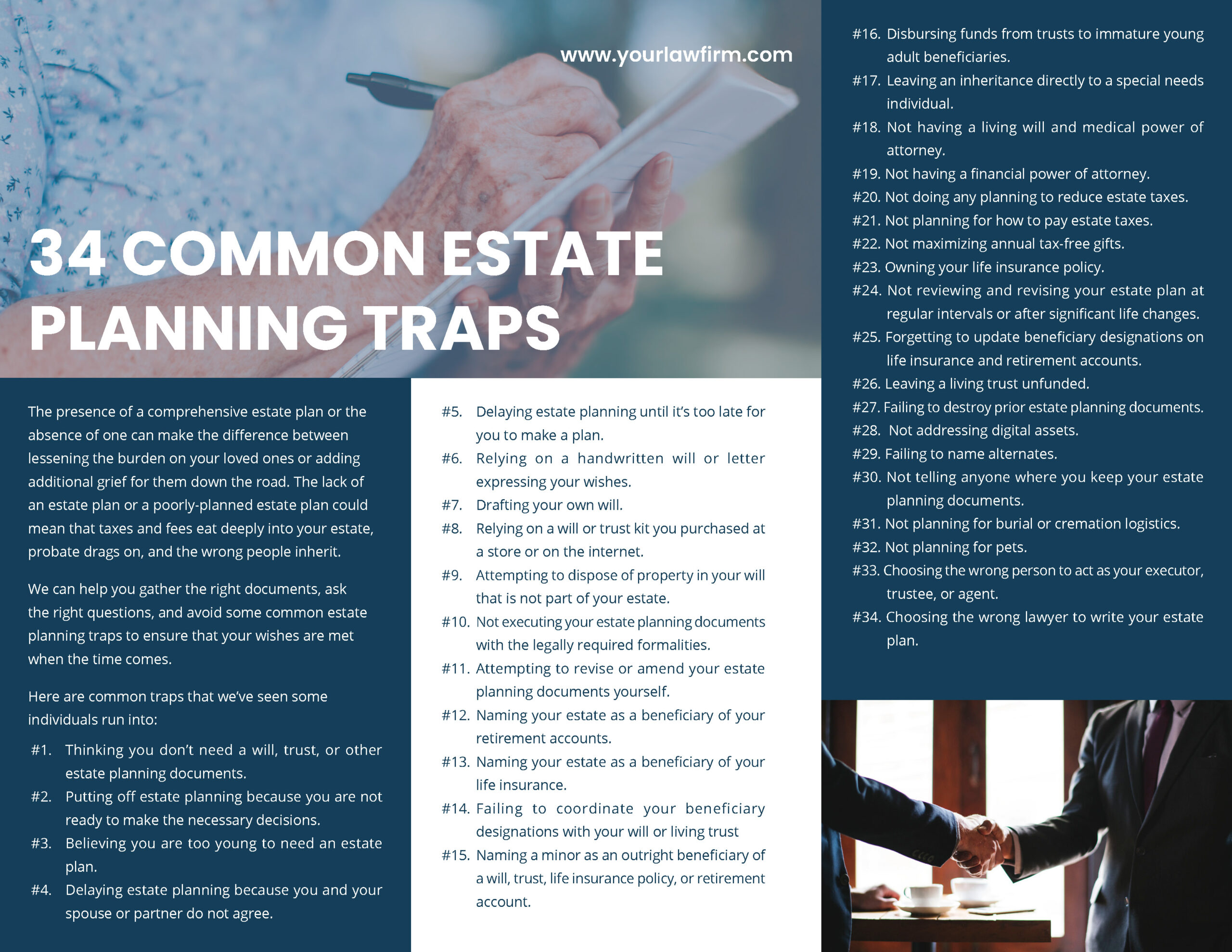
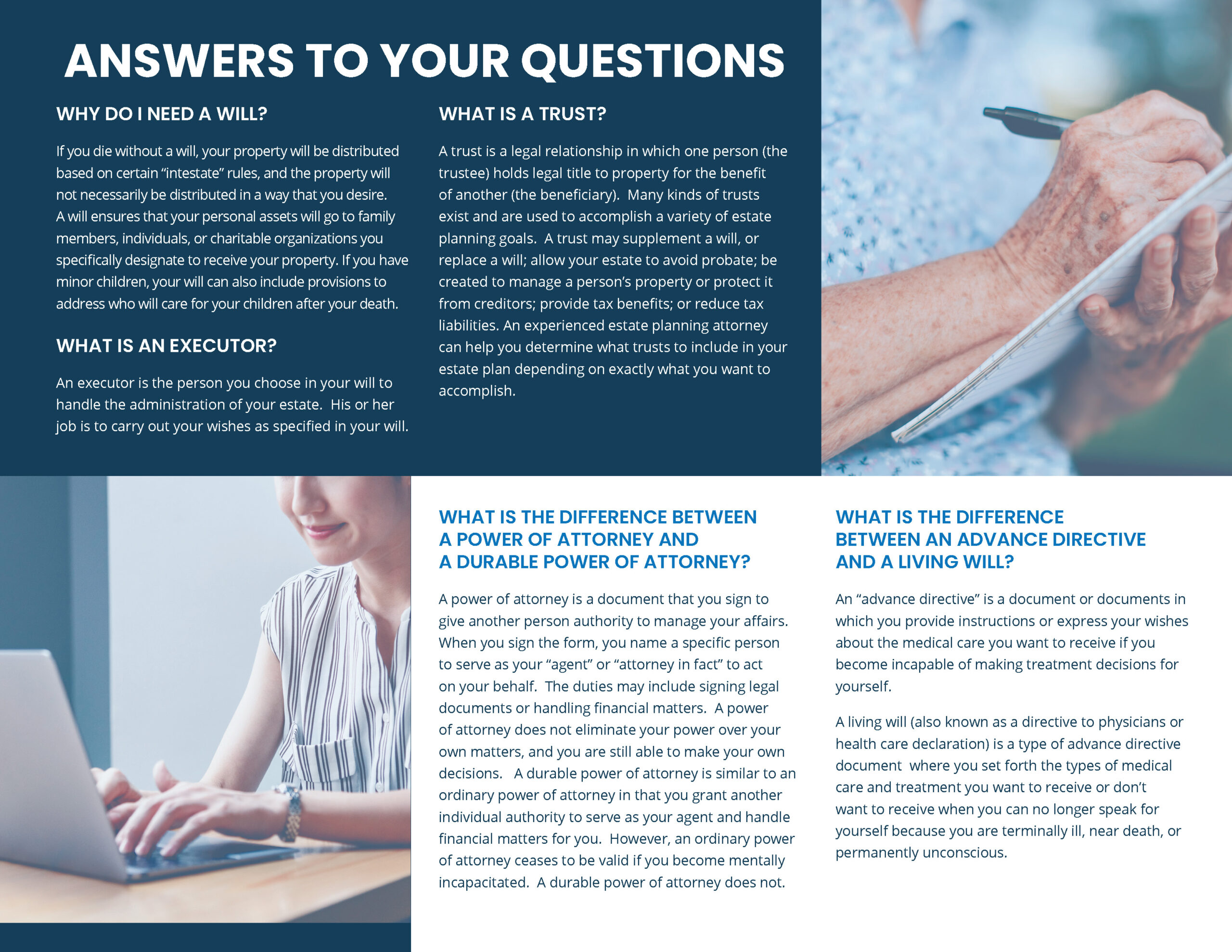
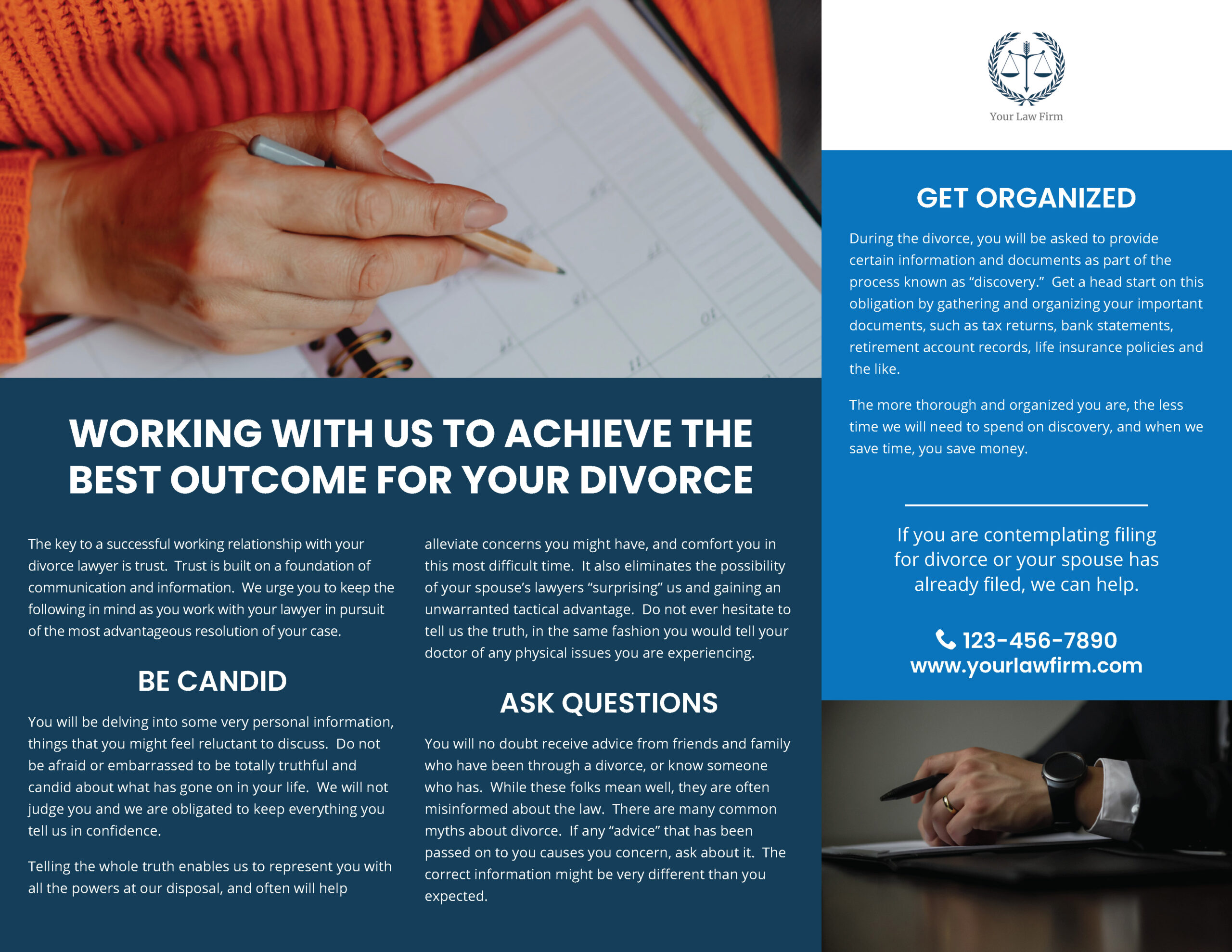
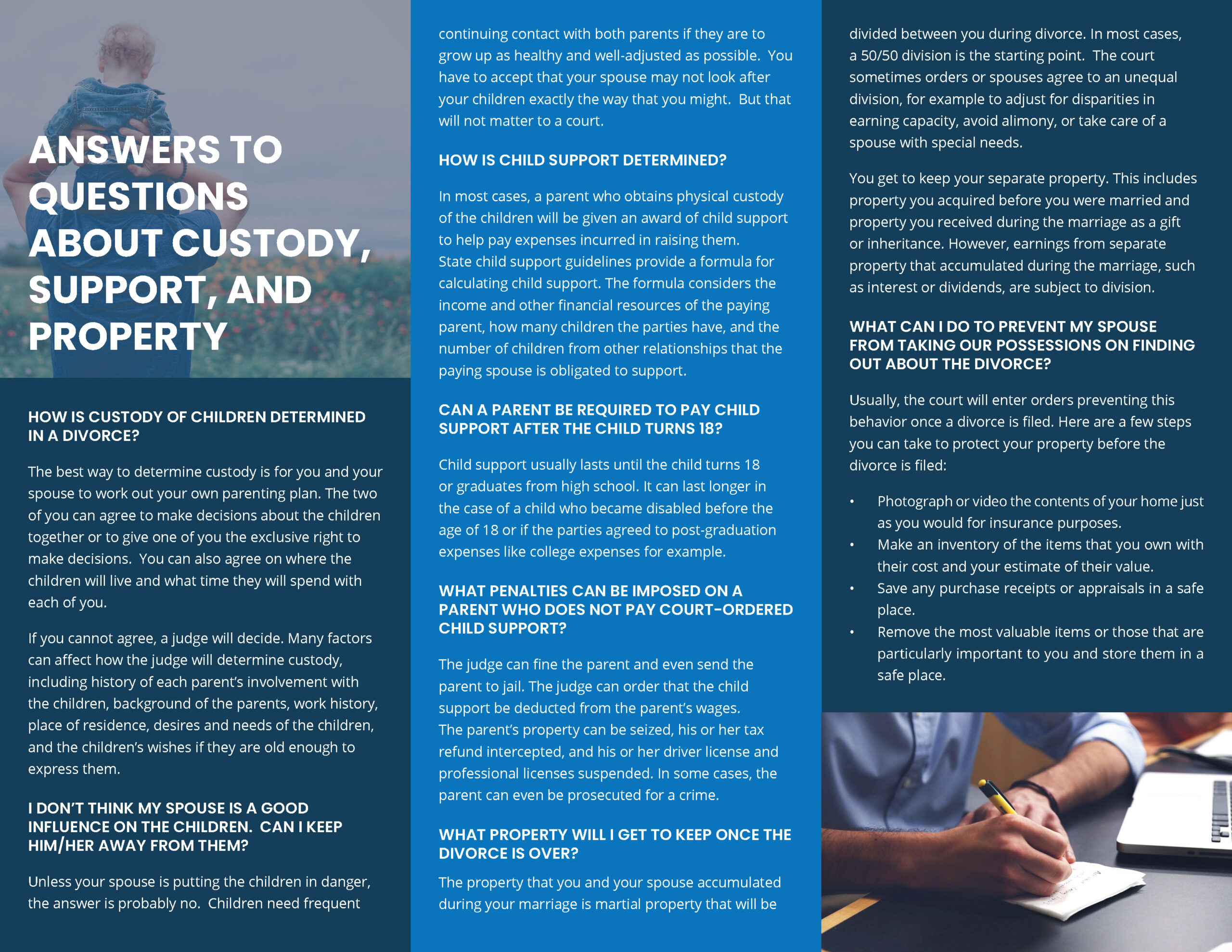
Tri-fold educational brochure
This four-color handout can cover all scenarios in your specialty, or focus on a selected niche. It explains how you help, what comes next, and potential solutions.
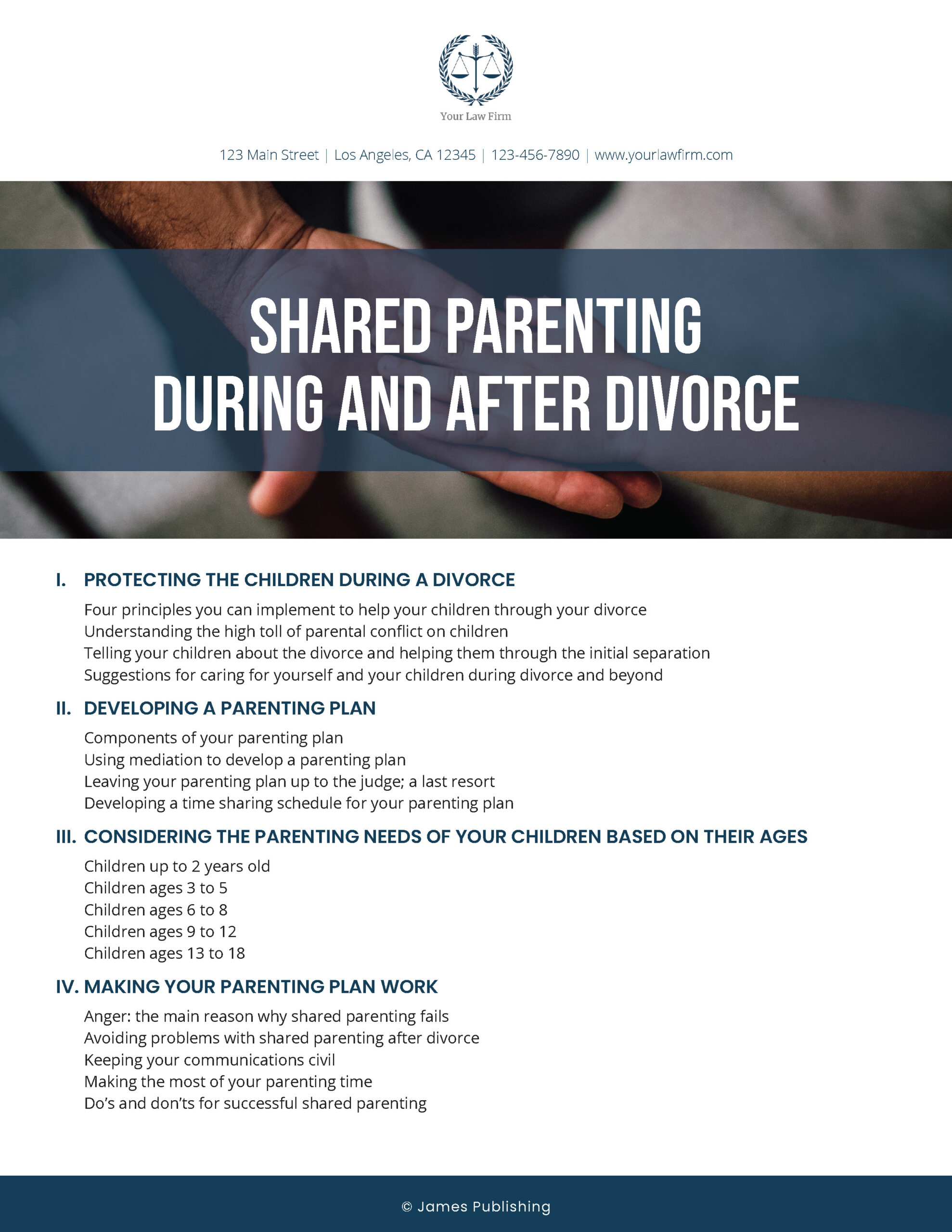
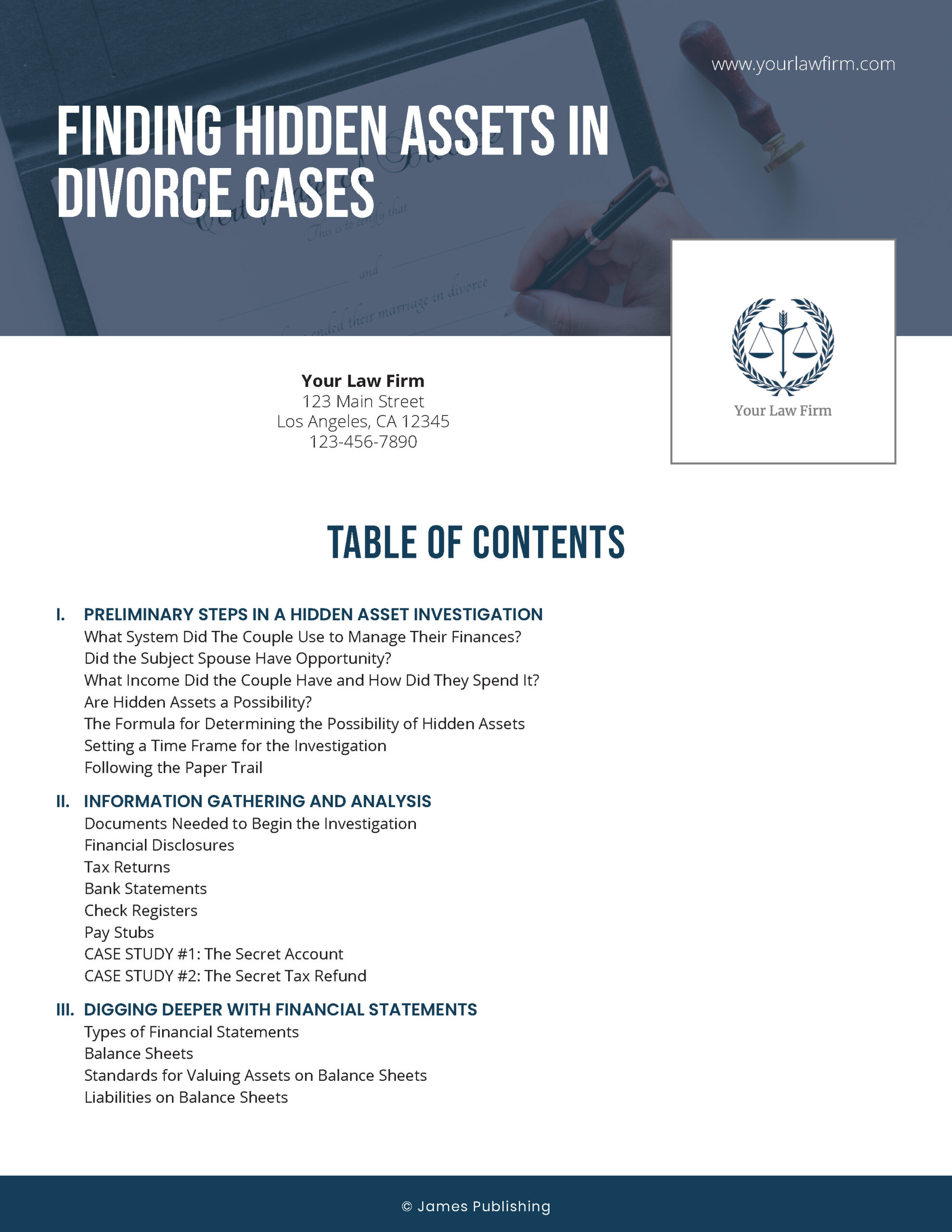
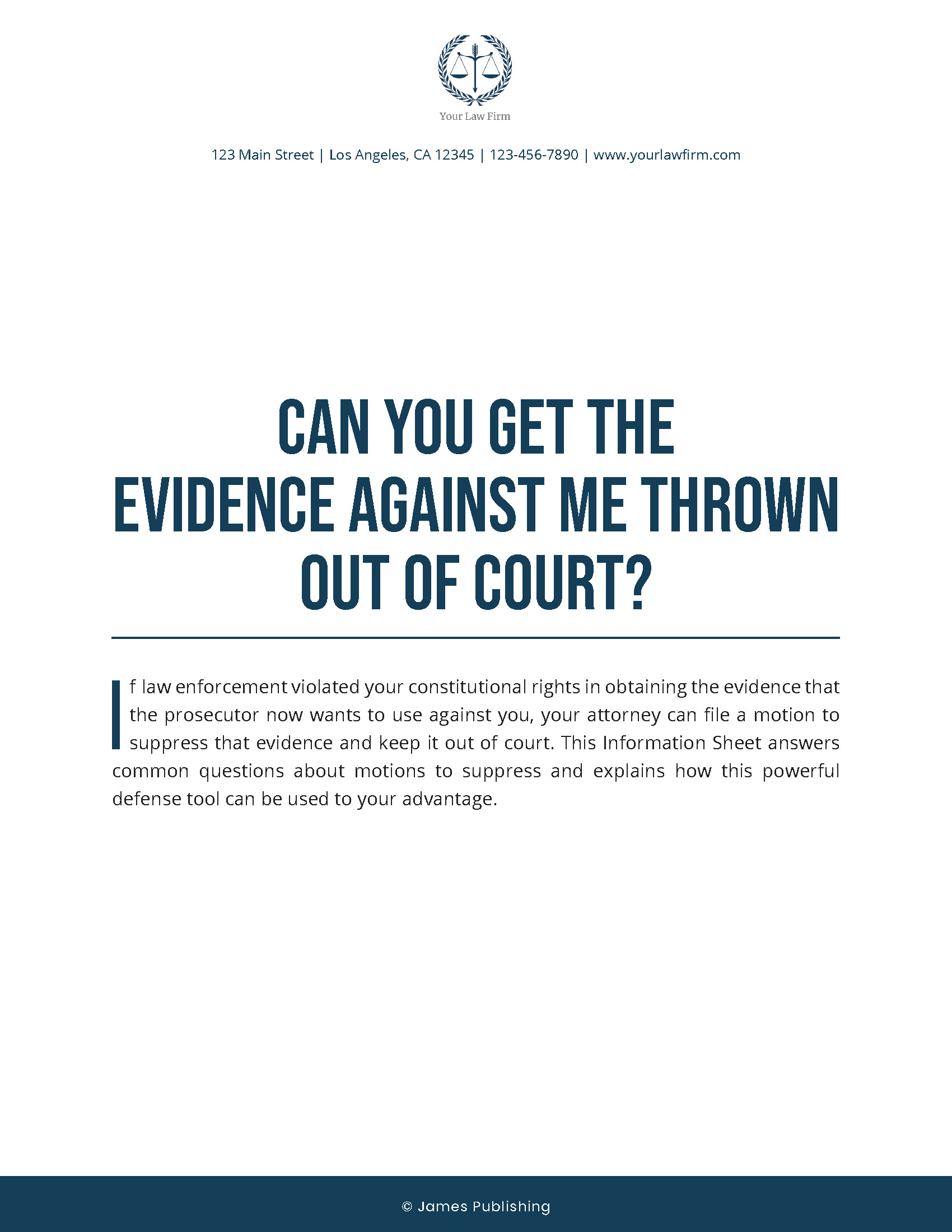
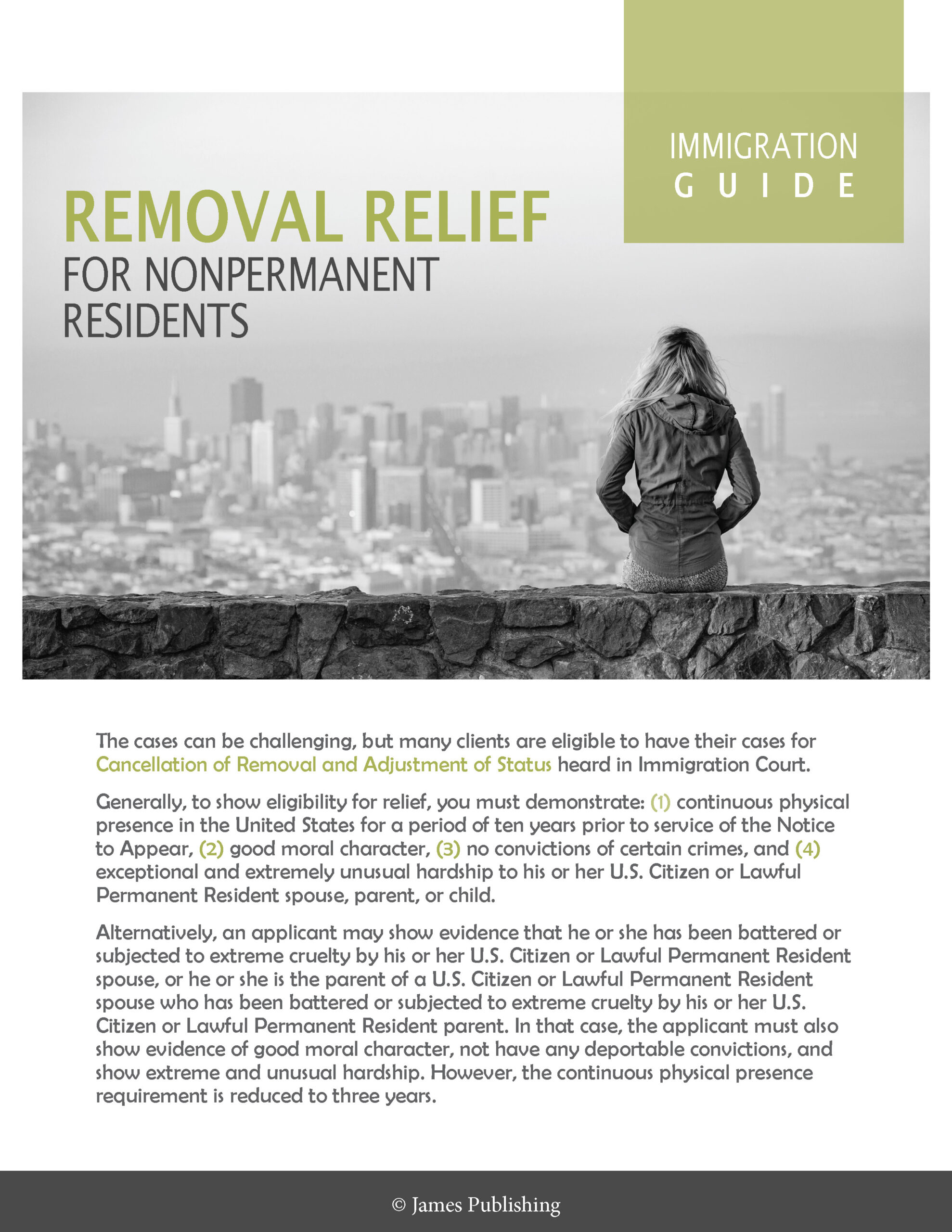
FAQ booklet
Head off routine questions from prospects and new clients by answering them in advance with this comprehensive collection.
“What to expect” booklet
Teach prospects and new clients how your representation will unfold. Includes flow charts and infographics to make the process easier to understand.
Brag booklet containing client testimonials
If you have a decent number of Google reviews and other sources of positive comments, we can compile them in a colorful booklet.
Welcome folder that holds the material listed above
We brand the folder in your firm’s names, and fill it with copies of the marketing items you have asked us to create.
Other possibilities include
-
Follow-up emails
-
Booklet containing client success stories (interview required)
-
Prospecting booklet: "Mistakes to Avoid When Hiring an [Injury / Estates / Family / Criminal / ____ Lawyer"
-
Attorney biography one-pager
-
Visual case roadmap
-
"Thank you for the referral" cards
Examples
We have created hundreds of different marketing pieces for law firms, and have extensive collections for 9 specialties:
-
Bankruptcy
-
Business litigation
-
Criminal and DUI
-
Employment
-
Estate planning
-
Family
-
Immigration
-
Personal injury
-
Social Security disability
-
Bankruptcy
-
Business litigation
-
Criminal and DUI
-
Employment
-
Estate planning
-
Family
-
Immigration
-
Personal injury
-
Social Security disability
Examples may be found below:
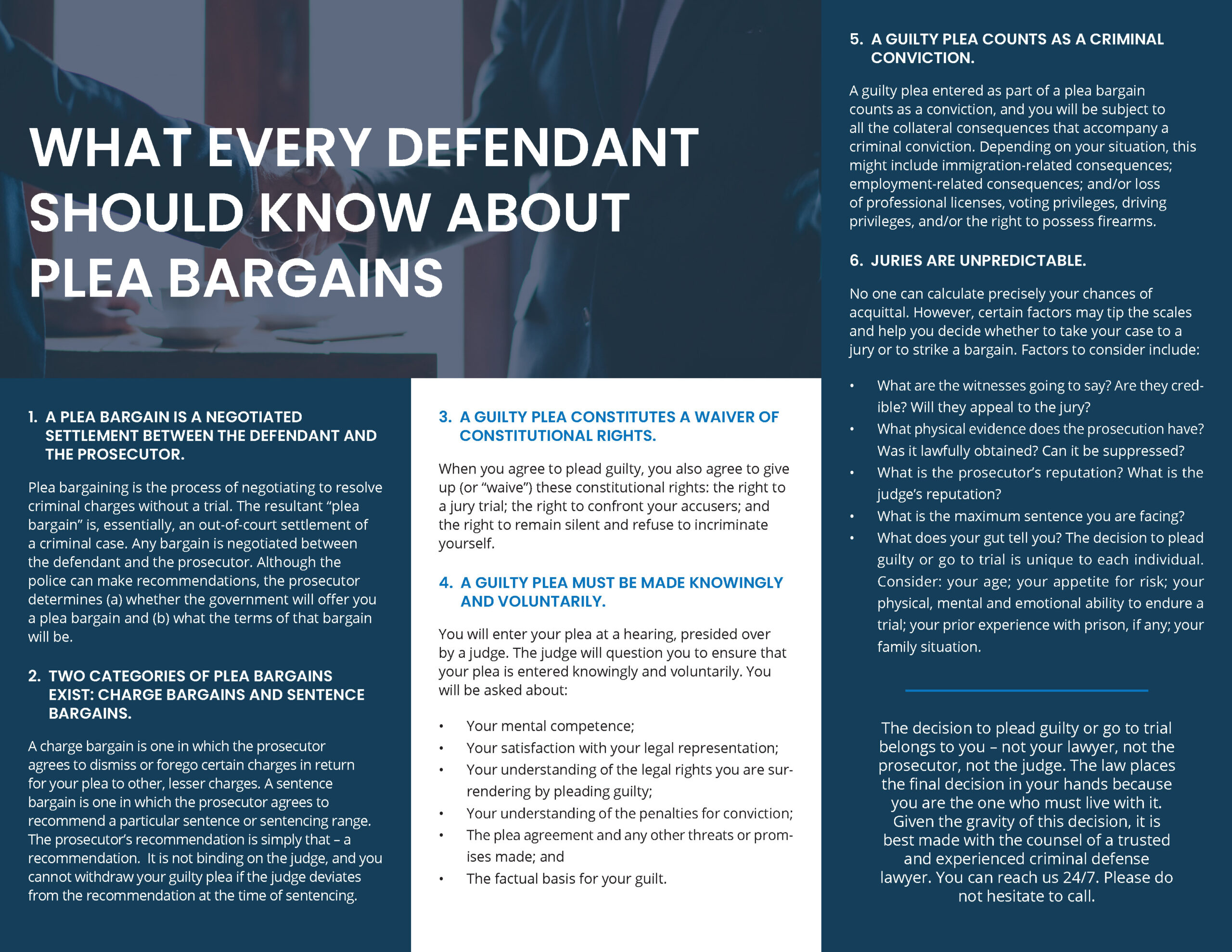
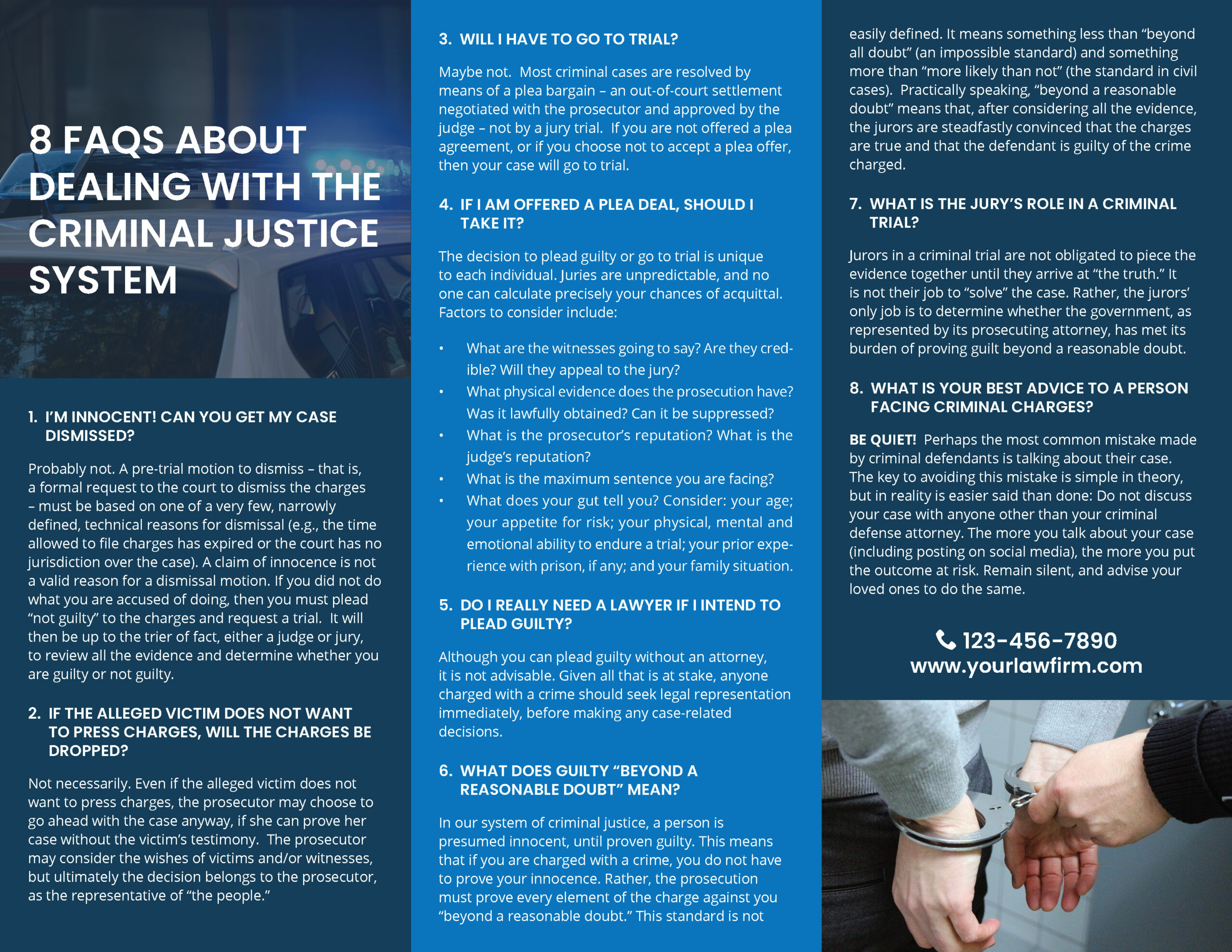
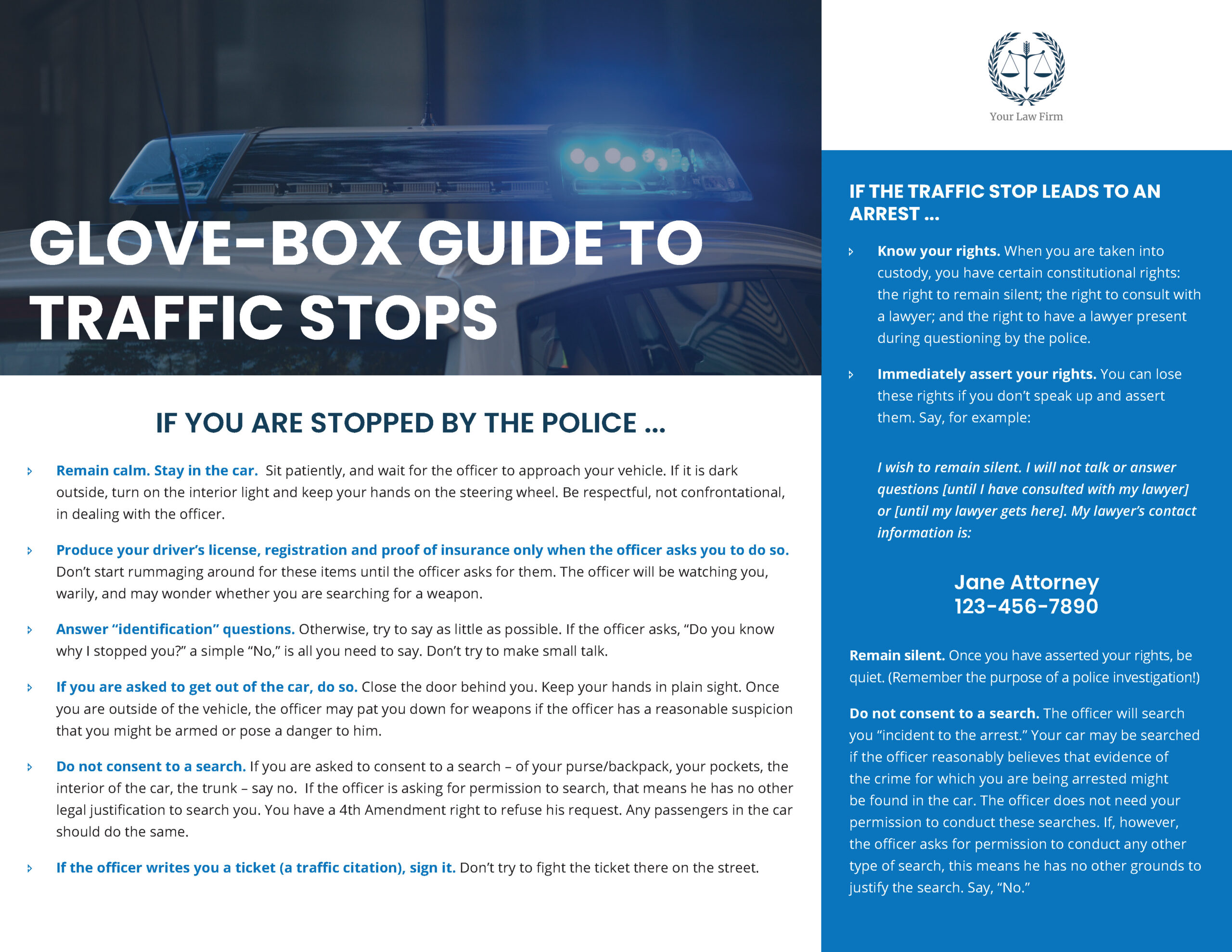
Booklets
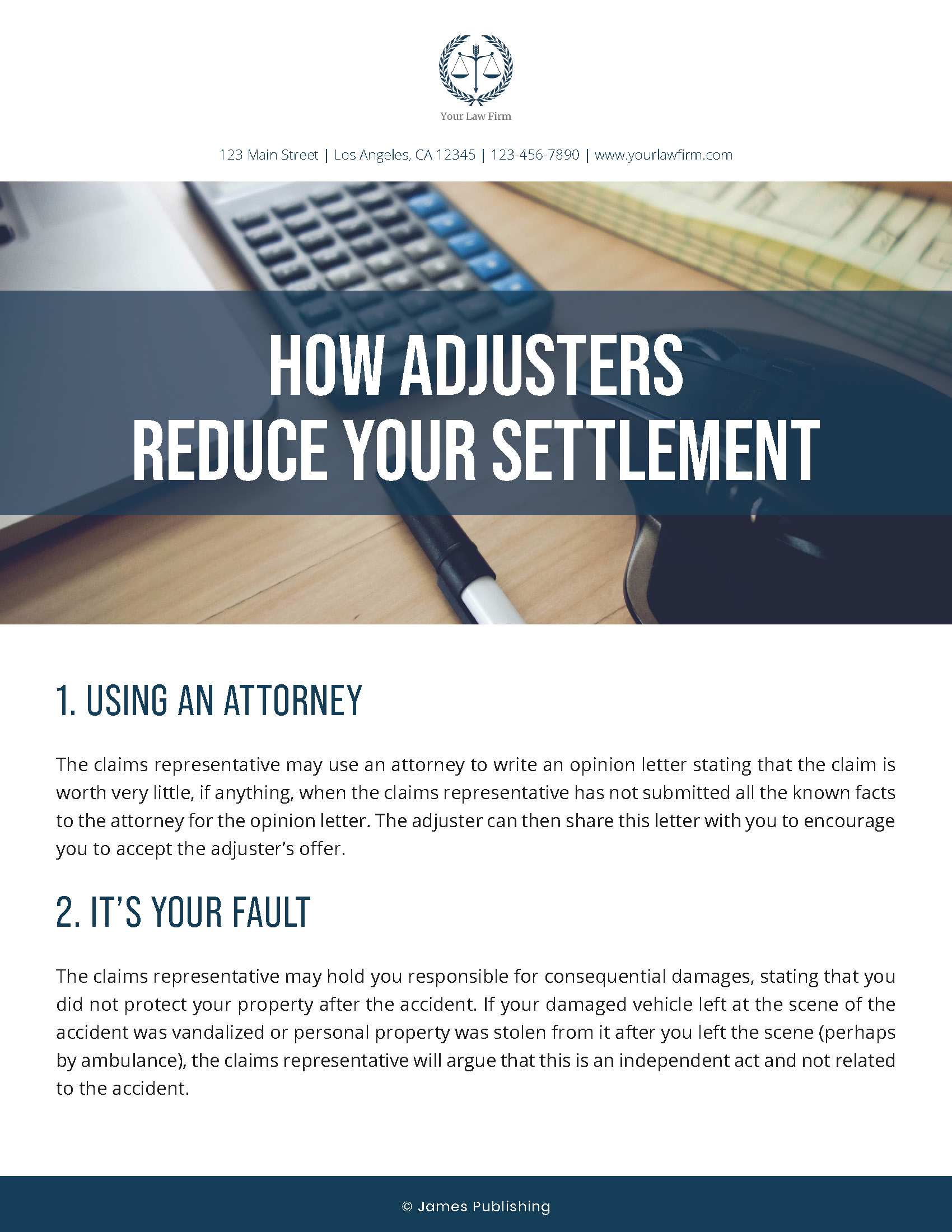




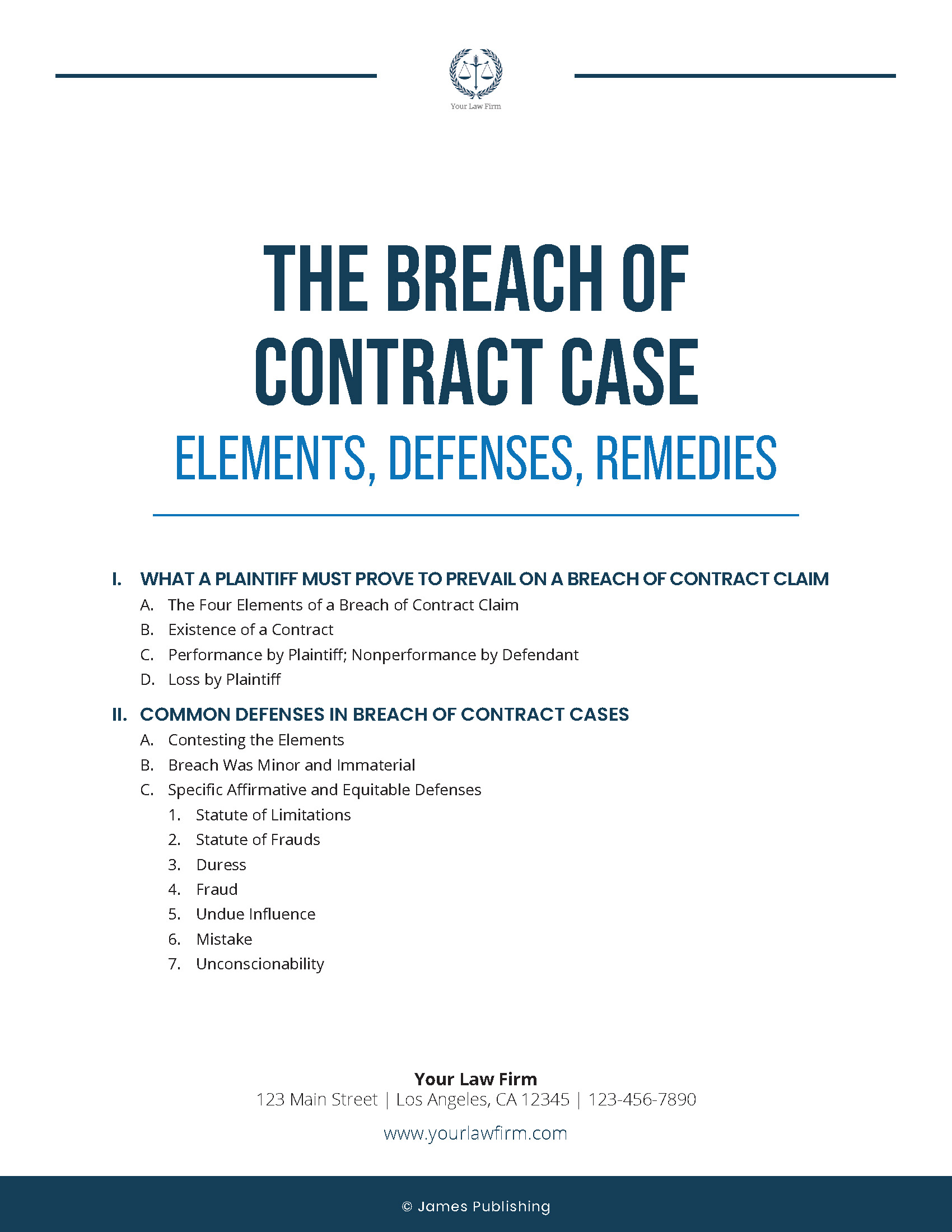
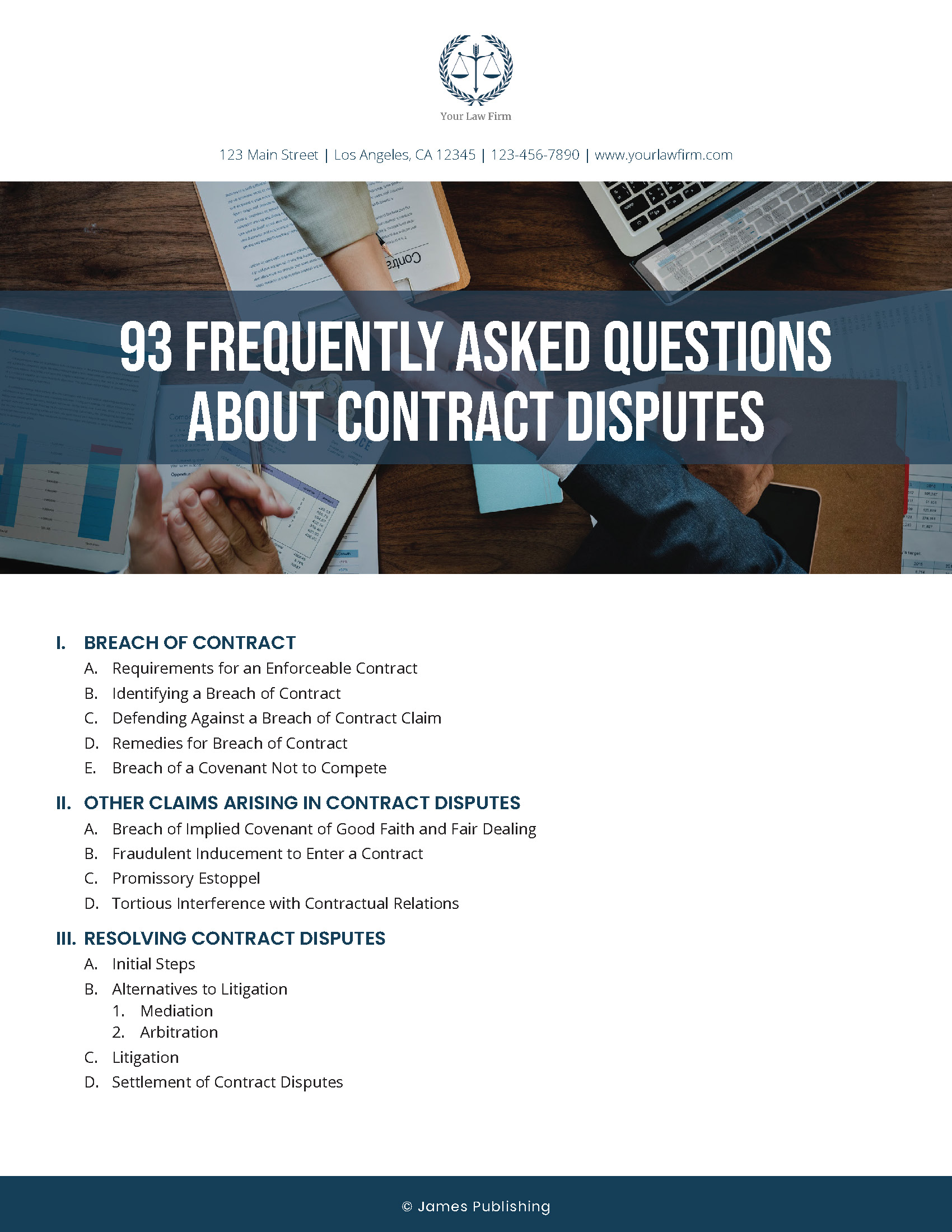
Brochures

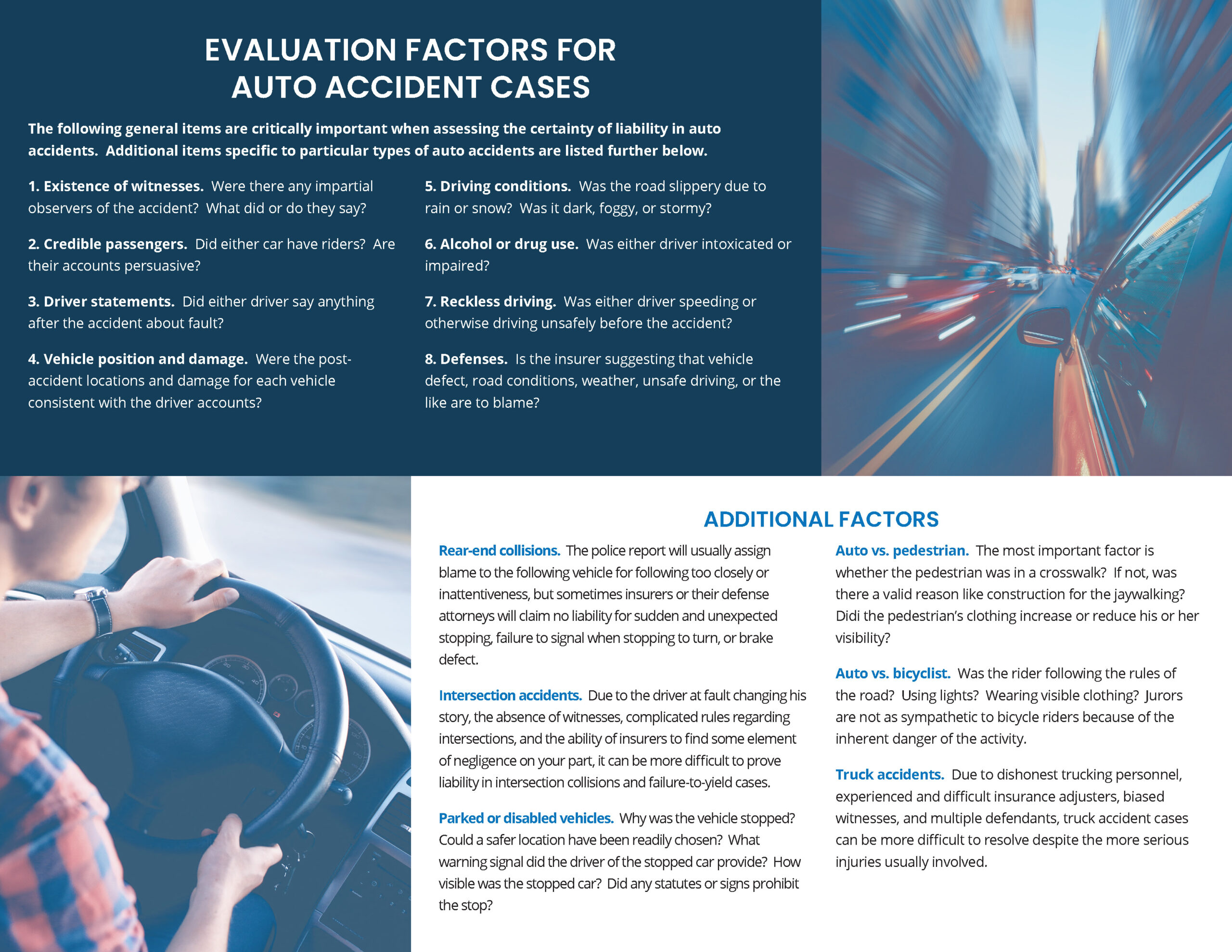
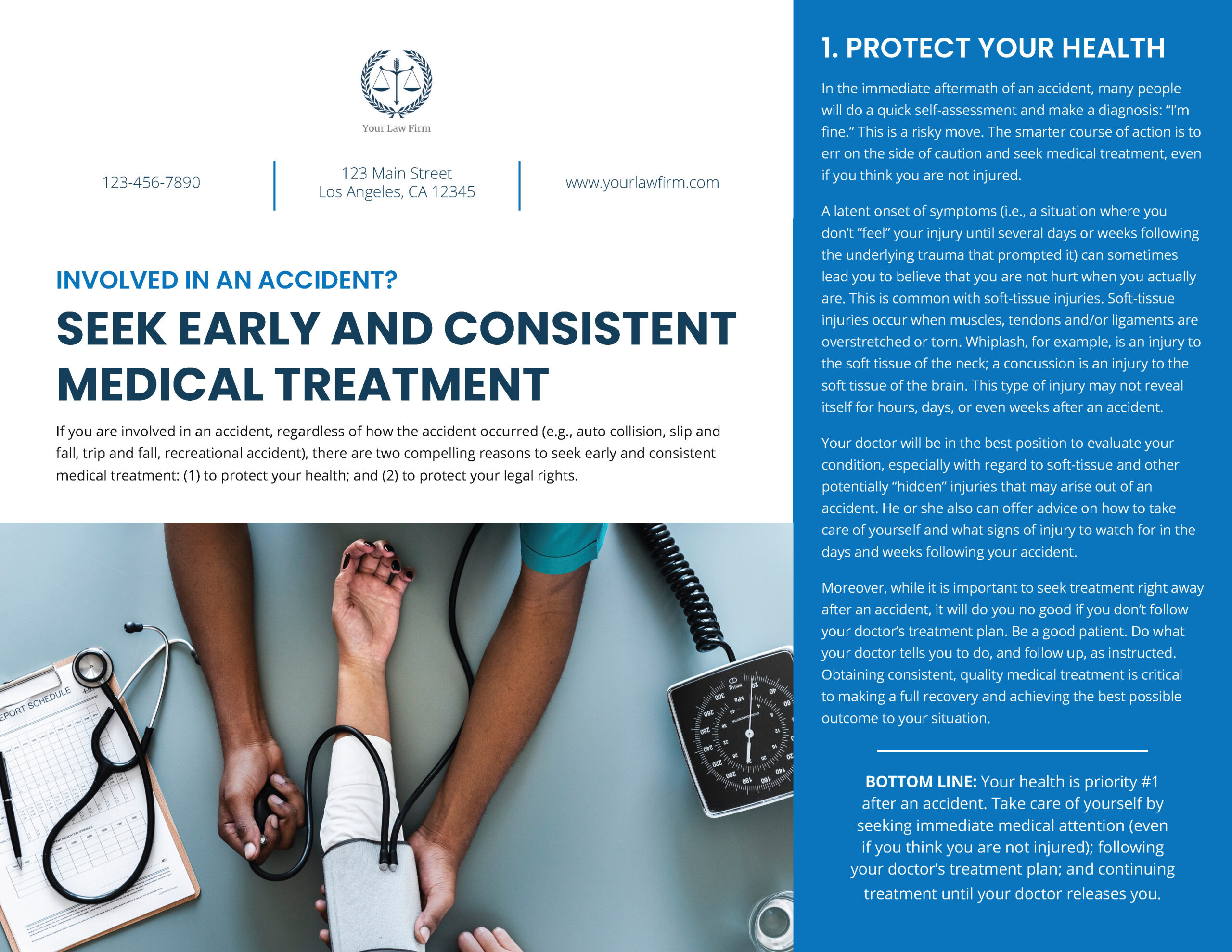
New Client Welcomes
Business litigation (15 emails)
Subject: Avoiding Penalties for Destruction of Evidence
Sometimes clients are tempted to intentionally search out and destroy evidence that appears to be unfavorable. Destroying evidence is a big mistake; don’t do it. Deliberate destruction of evidence is unethical and tactically unwise. Destruction of relevant material can destroy your credibility and lead a court to penalize your case severely.
Deliberate, willful, or negligent destruction of evidence is called “spoliation.” Spoliation is condemned because it can undermine justice and increase the risk that the case will be decided incorrectly. Destroying evidence can increase the costs of litigation as the evidence must be reconstructed or other less accessible and/or less persuasive evidence must be developed.
Spoliation can lead to a broad spectrum of sanctions. For example, the court may:
- Instruct the jury that the evidence that one party has destroyed or rendered unavailable was unfavorable to that party.
- Order the jury to find that designated facts favorable to the party that didn’t destroy evidence have been proven.
- Prohibit the party that destroyed evidence from introducing designated matters into evidence.
- Dismiss all or part of the offending party’s case.
- Require the offending party to pay the reasonable expenses, including attorney’s fees, incurred by anyone as a result of its conduct.
The severity of the sanction ordered by the court depends on the egregiousness of the behavior of the offending party. The most severe penalties are reserved for the destruction of evidence done with the intention of hurting the opponent’s case or enhancing yours.
Whether you are a plaintiff or a defendant, you must take steps to guard against a spoliation claim. All owners and employees of your business who supervise or control pertinent records must ensure that they are not destroyed.
I will help you to prepare a “litigation hold” document to be circulated to relevant personnel. I will also want to speak with your information technology personnel to ensure that automated destruction, purging and/or overwriting of relevant electronically stored information is halted, relevant desktop and laptop computers are not discarded and hard drives not overridden or erased, and appropriate backups and copying of computer hard drives are made.
Subject: Damages for Breach of Contract
The most common type of business litigation is the breach of contract case. In most breach of contract cases, the plaintiff is seeking money to compensate it for the financial losses caused the alleged breach. Sometimes the most hotly contested dispute is the amount of damages. A defendant may even admit that it breached the contract, but argue that the plaintiff suffered no loss or the loss was far greater than the plaintiff claims.
The most common type of damages awarded in breach of contract cases is compensatory damages. Compensatory damages are intended to compensate the plaintiff for any costs or losses caused by the defendant’s breach. There are two types of compensatory damages: expectation damages and consequential damages.
Expectation damages are the amount that would put the non-breaching party in the position she would be in had the contract been performed. For example, if a buyer ordered goods that did not conform to the specifications the buyer was expecting, the buyer could keep the goods and sue for the difference in value between the goods that were delivered and the goods that were expected. Or the buyer could return the goods and seek a refund. The buyer could instead seek the difference in price between the cost of substitute goods and the contract price, assuming substitute goods are more expensive.
Consequential damages are losses suffered by the non-breaching party that extend beyond the contractual loss such as lost profits. For example, a car manufacturer hires a service provider to operate and maintain its equipment. If the provider breaches the contract by failing to maintain a critical piece of manufacturing equipment, causing shut down of the assembly process, the damages to the equipment would be direct damages while the lost profits from not being able to make shipments to dealerships would be considered consequential damages. The losses must be a direct result of the breach and the non-breaching party has to prove that the breaching party was aware of the possibility of the consequential damages at the time the parties entered into the contract.
Duty to mitigate. The non-breaching party to a contract must try to offset its damages. For example, a hotel has to try to fill rooms with other guests when a company cancels its conference; a seller of a perishable product has to try to find other purchasers if the buyer reneges on its promise to buy; a wrongfully fired employee has to look for another job. If the non-breaching party fails to try to offset losses, the court will reduce any total award by what a reasonable non-breaching party would have done to avoid additional losses.
For further details, see my booklet, The Breach of Contract Case.
Divorce (12 emails)
Subject: Suggestions for Working with Your Lawyer
This is the first letter of a general educational series I send to new clients. Some of the information may not apply to your situation, but much will. I hope you find the series helpful. In this first email, I offer 5 suggestions for getting the best representation from our firm while keeping your costs under control.
The key to a successful working relationship with your divorce lawyer is trust. Trust is built on a foundation of communication and information. Keep the following in mind as we work together in pursuit of the most advantageous resolution of your case.
#1. Be Candid
This is a very difficult time for you. I and my staff realize that you will be delving into some very personal information and areas, things that you might feel reluctant to discuss. Do not be afraid or embarrassed to be totally truthful and candid with us about what has gone on in your life. We are professionals who will not judge you and we are obligated to keep everything you tell us in confidence.
Telling us the whole truth enables us to represent you with all the powers at our disposal, and often will help alleviate concerns you might have, and comfort you in this most difficult time. It also eliminates the possibility of your spouse’s lawyers “surprising” us and gaining an unwarranted tactical advantage. Do not ever hesitate to tell us the truth, in the same fashion you would tell your doctor of any physical issues you are experiencing.
#2. Ask Questions
This is your divorce and, very likely, unfamiliar territory for you. You will no doubt receive advice, both solicited and unsolicited, from friends, neighbors, family, co-workers and others who have been through a divorce, or know someone who has. While these folks mean well, they are often misinformed about the law. There are many common myths about divorce. If any “advice” that has been passed on to you causes you concern, ask us about it. The correct information might be very different than you expected.
#3. Get Organized
During the divorce, you will be asked to provide certain information and documents as part of the process known as “discovery.” Get a head start on this obligation by gathering and organizing your important documents, such as tax returns, bank statements, retirement account records, life insurance policies and the like.
Gathering documents can seem like a waste of your time, particularly when your spouse “already has all that information.” Whether he or she does or does not is beside the point; the law requires you to disclose what you know and what you have. If you have information or documents that are requested by your spouse and his or her lawyers and you do not disclose them, you might be barred from using them for your own benefit. Discovery is often a time consuming process, but an important one. The more thorough and organized you are, the less time we will need to spend on discovery, and when we save time, you save money.
#4. Use your Lawyer’s Services Wisely
You can save money and control the costs of your divorce by using our services wisely. Organize your thoughts and write down your questions before you call, so you can be sure to discuss all of your questions in one phone call. Use my office staff to make appointments, answer routine questions (such as when your next court date might be), confirm receipt of a document or other information, and for assistance with discovery.
#5. Rely on your Therapist, Friends and Family for Emotional Support
My staff and I can assist you with some of the normal emotional distress and personal difficulties you will experience. But we are not equipped to be therapists. If your issues appear more serious, we may suggest that you consult a mental health professional. For the routine emotional upsets that come up in every divorce, family and friends can provide a sympathetic ear.
Subject: The Four Steps to a Successful Property Settlement
You’ve probably given some thought to what property you would like to keep. However, it’s best not to begin the negotiations with your spouse prematurely. When negotiating a property settlement, there is a logical 4-step process to follow to make sure all assets and liabilities are accounted for, you are negotiating from a fully informed position, and conflict is minimized.
Step 1: Disclose All Assets and Liabilities
As I discussed in a previous email, before you and your spouse can divide your marital estate, you must know what’s in it. Each of you must fully to disclose to the other all of your assets and liabilities regardless of whose name is on them.
Step 2: Decide What’s in and What’s out
You and your spouse can agree that certain items should be kept out of the marital estate and given to one of you (or to your children). Typically, the law provides that property and debts that you acquired before you got married and property that you received as a gift or inheritance during your marriage belong to you and are not part of the marital estate.
Step 3: Value the Assets and Liabilities
After preliminary exclusions from the marital estate have been made, the values of the remaining assets and liabilities are determined. Values can be determined by agreement, informed opinion, appraisal, or sale. It’s usually a good idea to wait to start dividing things until reasonable values for all assets and liabilities have been determined. Beginning negotiations without facts means that you and your spouse will be negotiating from emotions. While emotion is always present and most certainly a factor, the decisions that have to be made must be based on financial facts.
Step 4: Divide the Assets and Debts
Everything that was accumulated during your marriage, including retirement benefits, is subject to division. The usual assumption is that the marital estate will be divided equally. Spouses sometimes agree to an unequal division for various reasons, for example to adjust for disparities in earning capacity, avoid alimony, or take care of a spouse with special needs.
Drunk driving (13 emails)
Subject: Investigating Your Case
Now that our initial interview is complete, the next steps are to gather and assess all the evidence in your case. We want to discover all facts that led the officer to conclude that you were intoxicated. We will obtain from the police and prosecution all the evidence they are using to build a case against you. These items may include:
- The police report.
- The names, addresses, and statements of any witnesses.
- Police dispatch tapes.
- Booking photos.
- Videos of your stop, field sobriety tests, arrest, and breath or blood test.
- Your criminal history. Prior convictions may enhance the punishment you could receive.
- The criminal histories of any witnesses which may affect their credibility.
- Your driving record. With driving infractions on your record, being convicted, even of a lesser charge, may result in a license suspension.
We will visit the scene. Going to the scene sometimes reveals helpful issues. Was the officer’s vision of your driving partially obscured? Is the area where the field sobriety tests were conducted level? Is the driving error that led to your initial detention common at that location?
Many times, motorists make the same driving error in the same location because of the road design. Perhaps everyone crosses over the line when making the same turn that you did. The argument then is that your driving mistakes had nothing to do with drinking and everything to do with poor road engineering.
Mechanical inspection of your vehicle may be in order if you believe something was wrong with it.
Finally, we will gather and examine evidence of any chemical testing you underwent. These records can be extensive. Among other items, we will need the calibration, maintenance, and repair records of the equipment you were tested on and the training, testing, and certification records of the personnel involved in the testing.
In serious cases involving major accidents, we may consult an accident reconstructionist. Obtaining reports of other accidents at the same location as yours may help show that it was the roadway, rather than your driving, that contributed to the accident.
Subject: Evaluating your Case in General
Once we have investigated your case and gathered the evidence both favorable and unfavorable, we begin to evaluate your case for trial or plea negotiation. We will thoroughly analyze the strengths and weaknesses of the state’s case and consider whether the state can prove each element of its case beyond a reasonable doubt.
Additionally, we will analyze the state’s evidence, including police reports, field sobriety tests, chemical evidence, the state’s witnesses, and your prior criminal record.
Additionally, we will analyze the state’s evidence, including police reports, field sobriety tests, chemical evidence, the state’s witnesses, and your prior criminal record.
After evaluating the state’s case, we will analyze the strengths and weaknesses of your case, including the probable testimony of witnesses, defenses available to you, potential penalties facing you, and prior similar cases and relevant statutes.
The first consideration is whether the state can prove beyond a reasonable doubt each element of the offense that you are charged with. We must also examine whether the state can prove it had probable cause to stop you, based on your appearance, demeanor, conduct, and driving. How you reacted to the police officer once you were stopped will also have a bearing on evaluating the case. Suppose, for example, a driver immediately pulled off to the side of the road once the police siren or flashing lights were activated and was cooperative in answering questions and in agreeing to submit to chemical tests. Under these circumstances, a high BAC reading can be shown to be inconsistent with the driver’s behavior and doubt can be cast on the test results.
We will find out whether the state has any witnesses to corroborate the officer’s observations. The names and addresses of these witnesses are usually listed in the police reports, which we can obtain through discovery. We will contact these witnesses and interview them.
We must also evaluate your prior driving record and criminal convictions, if any. We must thoroughly examine the validity of these convictions considering whether you had counsel, whether the conviction was the result of a plea, how long ago the conviction occurred, and whether the conviction was the result of a juvenile offense. Depending on the circumstances, we may be able to prevent the state from using the conviction against you.
Estate planning (11 emails)
Subject: Defining Your Estate Planning Goals
This is the first letter of a general educational series I send to new clients. Some of the information may not apply to your situation, but much will. I hope you find the series helpful.
A good estate plan is a tremendous gift to your loved ones and to yourself. It will ensure your assets pass to the people you want to benefit and to the causes and organizations that matter to you. It can minimize probate costs, reduce taxes, and insulate inheritances from creditors. It can provide a succession plan for a family business. It can protect you if you are incapacitated, ease the emotional burdens on your family, and give you great peace of mind.
Creating an estate plan requires close collaboration between you and your estate planning attorney. The more you understand about estate planning, the more effectively you and I will be able to work together to achieve your goals. One of the most important things you can do is educate yourself. Although you do not need to understand all the technicalities involved in estate planning, you need a basic understanding of what can be achieved given the extent of your estate and the needs of your loved ones.
You play a crucial role in developing a good estate plan. You need to be engaged in the planning process every step of the way. Your first important steps are to determine the extent and value of your estate and to outline your goals. For example, do you want to leave your children equal shares of your estate, do you want to leave gifts to those outside your immediate family, do you have minor or special needs children to provide for, do you want to avoid probate, do you need tax planning?
To help you clarify your goals and identify your assets, I have prepared a booklet, Defining Your Estate Planning Goals and Identifying your Assets. The booklet sets out 24 questions to help you begin to plan your estate and a form you can complete to make an inventory of your property.
Subject: Choosing your Executor
Your executor will be responsible for processing your will through probate, locating and protecting your assets, paying your debts, and distributing the remaining property to the beneficiaries.
You are looking for three things in your executor. He or she must be someone (1) you trust; (2) who is capable of doing the job; and (3) who is willing to do the job. Although some of the necessary tasks may be complicated (like preparing tax returns or making investment decisions), your executor can hire professionals (attorneys, accountants, investment advisors) for assistance. Nevertheless, you want to choose a person who is intelligent, responsible, and well-organized.
It’s best to choose someone who lives in your state as some states have restrictions on out-of-state executors and someone local will find it easier to do the job. If you also have a living trust, it’s a good idea for the same person to serve as your executor and as successor trustee of the trust.
A spouse or a trusted child can be a good choice, although sometimes choosing one child over another can cause hurt feelings. In the interest of family harmony, you can name more than one executor, although that may not be the best idea if you think they can’t work together. Naming a trusted friend may be the solution. It’s a good idea to name an alternate in case your first choice is unable to serve when the time comes.
Make sure the person you choose is willing to serve before naming him or her in your will. You may also want to discuss your decision with the family members you did not choose. Offering them a rational explanation for your choice may resolve their disappointment. You may even find they are relieved not to have the burden.
For additional suggestions and cautions, see my booklet, Choosing an Executor for your Will.
Injury (12 emails)
Subject: Six things you can do to help your case
Building a strong personal injury case takes a team effort, and you are an integral part of that team. Here are six things you can do to help your case:
1. Be honest and forthright with us at all times.
A successful outcome to your case depends upon our mutual confidence, cooperation and trust. We can deal with almost anything if we know about it ahead of time. If we are surprised by a “bad” fact during settlement negotiations or at trial, that can derail your case.
2. Be a good patient.
Keep all your medical appointments. Follow your doctor’s treatment orders.
3. Be a good record-keeper.
Maintain a file of your medical bills and medical-related expenses associated with your injury.
Keep a record of your medications. An easy way to do this is to keep all your empty prescription bottles. If that is cumbersome, take a picture of each medication and every prescription refill, and store those photos in a separate folder on your phone.
You should also maintain a separate file to track you non-medical economic losses. This includes your out-of-pocket expenses related to, e.g., property damage, transportation, household help, and other miscellaneous items, as well as your lost wages and benefits. Keep all your receipts, payroll stubs, W-2 forms, tax returns and other injury-related financial information.
4. Gather and preserve important evidence.
- Make a list of all doctors, hospitals and other medical providers/facilities that have treated you, and provide that list to us. Update that list any time you see a new provider.
- Take a business card from every provider and store them together in one place, so you can quickly and easily locate contact information, if needed.
- Make a list of all potential witnesses and their contact information. This includes eyewitnesses to the injury-accident as well as people who know how your injury has affected you (e.g., friends, family, neighbors, co-workers, etc.).
- Take photographs of any property damages and of your injuries.
5. Stay in touch.
When we reach out to you, please return phone calls promptly, and read and respond to all correspondence. This will be especially important during settlement negotiations and, if a lawsuit is filed, during the discovery process. Let us know of any changes in your personal life (e.g., loss of employment; change of jobs; change in marital status); changes in your physical condition or the progress of your recovery; and, of course, any change of address or contact information.
6. Keep the details of your case confidential.
Do not talk to anyone outside of your immediate family about your case. Likewise, do not, under any circumstances, talk about your case on any social media platform. Be similarly cautious about the pictures you post. You may think that the insurance company for the person who caused your injuries won’t investigate your social media accounts, but they will. Even if you have a perfectly reasonable explanation for that photo of you playing volleyball on the beach, that photo will speak louder than your words and will negatively impact your case.
Subject: 11 factors that can impact the value of your case
Even though every client is a unique individual and each case is different, there are certain factors that impact the value of every case:
- Fault (liability)
- Medical expenses and treatment records
- Quality of medical information
- Nature of your injuries
- Lost income, wages, profits
- Collision damage
- Likeability factor
- Quality of witnesses
- Insurance carrier
- Jurisdiction
- Time
Just how each of these factors will impact the value of your case – whether positively or negatively – will depend on your particular circumstances. To learn more, download our short booklet, Eleven Factors that Impact the Value of your Personal Injury Case.
